
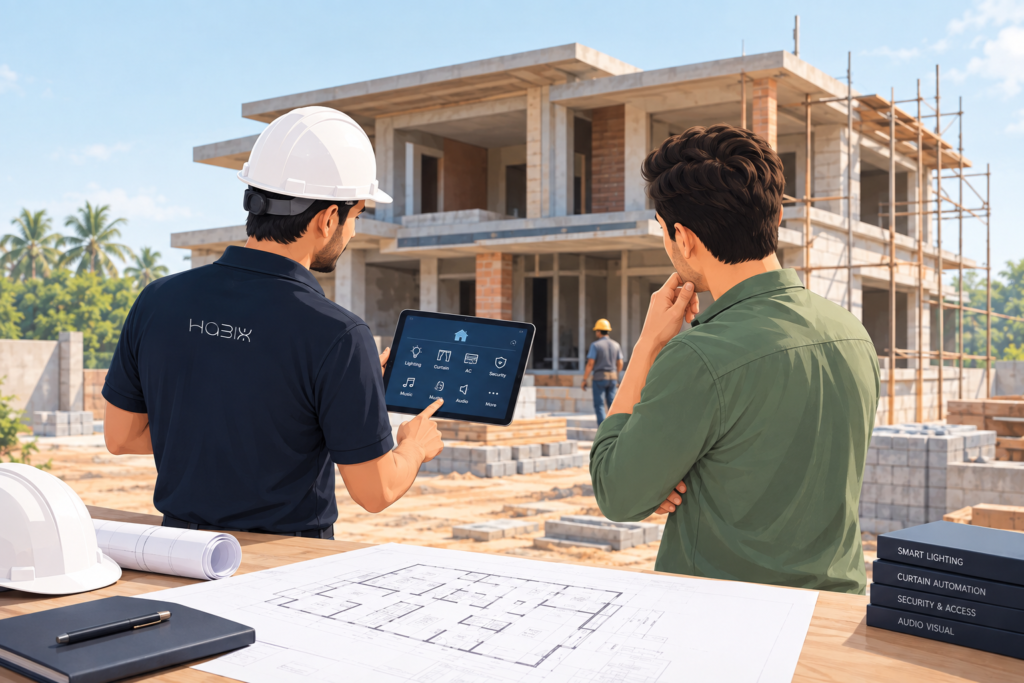
Home automation for new house is easier to think beyond the basic electrical and interior requirements. If you are considering home automation for a new house, planning it during the early stages of the project can make the installation more organised and easier to coordinate with the rest of the work.
Home automation can bring together different parts of your home, including lighting, curtains, climate control, security, entertainment and access. The important part is not simply choosing smart devices, but deciding what you want to automate and how those systems should work together.
When Should You Start Planning Home Automation For New House?
The best time to start discussing home automation is during the design and electrical planning stage of your new home, before the electrical work is finalised.
You do not need to select every product or automation feature on the first day of construction. However, discussing your requirements early gives the automation team enough time to study the floor plan and coordinate with your architect, interior designer and electrical team.
A typical planning process can look like this:
House Design → Automation Planning → Electrical Planning → Installation → Configuration
Starting early also gives you more time to compare different solutions and decide which areas of the house actually need automation.
What Should Be Planned Before Electrical Work?
Home automation electrical planning is not limited to deciding which smart products you want to install. The location of switches, control panels, sensors, curtain motors, access devices and network equipment can all be considered as part of the overall house plan.
Lighting and Switches
Lighting is usually one of the first areas homeowners consider when planning a smart home. Instead of treating every light as an individual device, you can decide which lights should work together and where different controls should be placed.
For example, a living room could have different lighting scenes for everyday use, entertaining guests or watching a movie. Bedrooms, corridors and other areas can also be planned according to how you use them.
Discussing these requirements before the electrical work is completed can help determine suitable switch locations and the infrastructure required for the chosen system.
Curtain and Blind Automation
If you are interested in automated curtains or blinds, it is better to consider them while the windows, ceiling details and electrical points are being planned.
The curtain type, motor position, power requirement and control method can be discussed in advance. This can help the automation installation fit neatly into the overall interior design instead of requiring changes after the interiors are finished.
AC and Climate Control
Climate control can also be included in your home automation plan. Depending on the equipment and automation system, you may be able to integrate control of selected AC or climate-related functions.
It is useful to decide which rooms need this type of control before the electrical and interior work is completed. This gives the automation team a clearer idea of the equipment and integration requirements.
Security and Access
Security and entrance systems are another area worth planning early. Depending on your requirements, a home automation project may include digital locks, video door phones, alarm systems, door and window sensors, gate automation or other access solutions.
Planning these requirements together can make it easier to decide where devices should be installed and how they should interact with the rest of the home.
Network and Connectivity
A connected home also depends on suitable network infrastructure. When planning a smart home, consider where Wi-Fi access points, network equipment and other connectivity requirements may be needed.
The requirements can vary considerably between an apartment, an independent house and a large villa. The network should therefore be planned around the size and layout of the home and the number of connected systems you expect to use.
Why Is Early Planning Important?
The biggest benefit of planning home automation during construction is coordination. Your automation requirements can be considered alongside the electrical, interior and architectural plans instead of being treated as an addition at the end of the project.
Early planning can help with decisions such as switch and control locations, sensor positions, power requirements, network points and curtain motor locations. It can also reduce the need for unnecessary changes once painting, false ceilings and other interior work have been completed.
More importantly, early planning gives you time to understand your options. You can decide which features are genuinely useful for your home instead of selecting products quickly when construction is almost finished.
What If Your House Is Already Under Construction?
If construction has already started, that does not automatically mean home automation is no longer possible.
The available options depend on the current stage of the project, the existing electrical work and the features you want to add. A home automation professional can review the house plan and current infrastructure and suggest an approach based on the project.
For a new house, a wired system may be considered where suitable infrastructure can be planned from the beginning. Wireless solutions can also be useful in certain situations, while some projects may benefit from a combination of wired and wireless technologies.
If you are trying to understand the difference between these approaches, you can read our guide on Wired vs Wireless Home Automation: Which Is Better for Your Home?
Do You Need to Automate the Entire House?
Not necessarily.
A home automation system for a new home does not have to include every room and every electrical device. You can prioritise the areas that are most useful to you and plan the system around your lifestyle.
For example, you may initially focus on living room lighting, bedroom curtains, main door access, gate automation, security, AC control or home entertainment. Other areas can be considered based on your requirements and the system’s ability to support future expansion.
The goal should be to create a home that is easier and more convenient to manage, rather than simply adding as many smart devices as possible.
A Simple Home Automation Planning Checklist
Before your electrical work is finalised, it is useful to discuss the following with your automation company:
- Which rooms do you want to automate?
- Which lights should be automated or grouped together?
- Where should switches and control panels be located?
- Do you want automated curtains or blinds?
- Which AC or climate systems need integration?
- Do you need digital locks or a video door phone?
- Do you want gate automation or security sensors?
- Where should Wi-Fi and network equipment be placed?
- Would a wired, wireless or hybrid solution suit the project?
- What should be prepared now for possible future automation?
Having these points ready can make discussions with your architect, electrical team and automation company much more productive.
When Should You Contact a Home Automation Company?
Ideally, you should contact a home automation company before the electrical planning is finalised. You do not have to wait until the house is nearly completed.
Sharing the floor plan and discussing your requirements at an early stage allows the automation team to understand the project and coordinate the necessary requirements with the other professionals working on your home.
At Habix, homeowners can also explore different home automation solutions at the Experience Centre before deciding what they want for their own home.
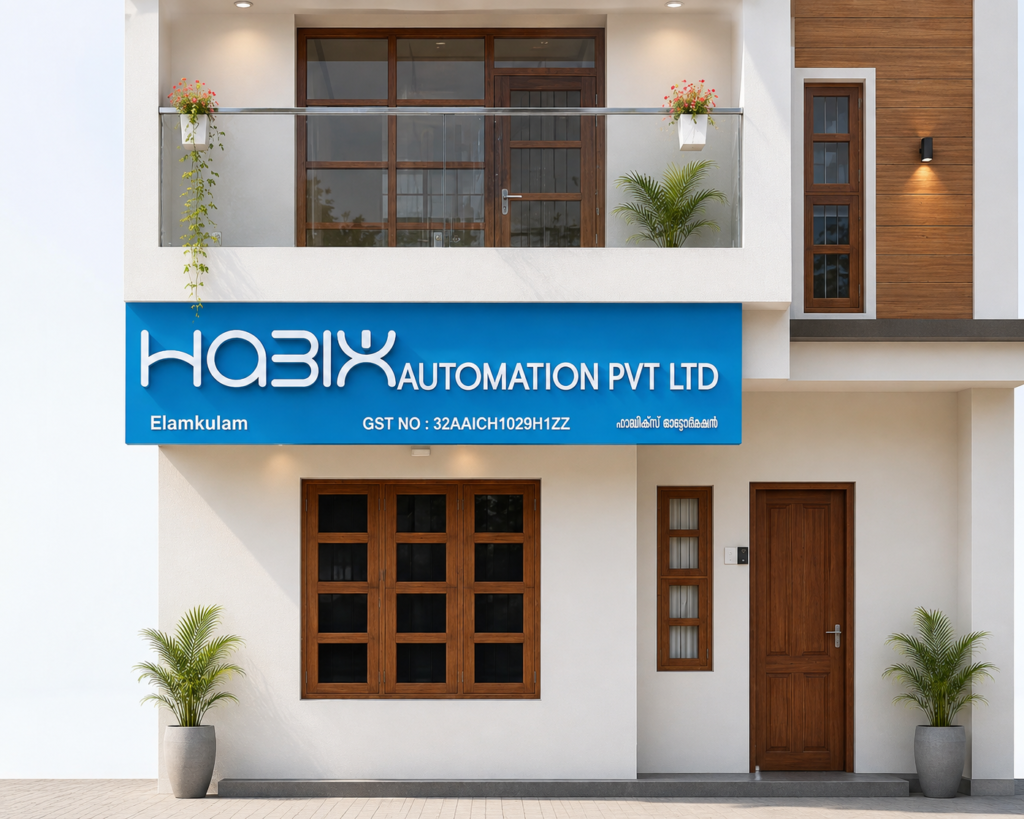
Visit Habix Home Automation Experience Centre, Kochi
Planning a new home?
Visit the Habix Experience Centre, Kochi to explore home automation solutions, understand how different systems work and discuss what can be planned for your home.
Plan your home automation early. Build it around the way you actually live.